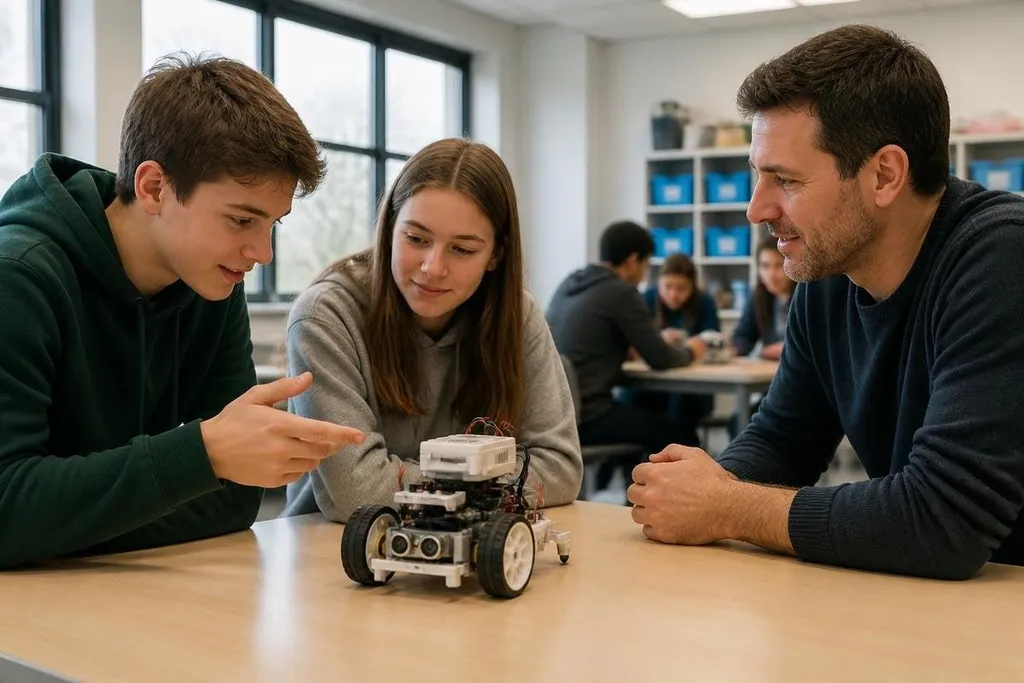
A classroom robot can earn money in several ways before a school buys a second machine. The strongest business ideas sit around the robot: lessons, teacher training, repairs, software, and proof that students are learning.
If you’re building a robotics company or planning a school pilot, the question is practical: who pays, what do they receive, and what keeps the contract going after the first purchase?
- Hardware sale: a robot, controller, sensors, and setup
- Paid services: teacher training, lesson design, repairs, and technical help
- Recurring income: software access, new course content, and support plans
Start with the classroom problem
Schools rarely buy a robot because its arm has a certain number of joints. They buy a way to teach coding, electronics, engineering, or problem-solving with equipment students can touch and test.
That changes the product. The supplier needs to show how a teacher starts a lesson, how a student writes code, and what happens when the robot fails. A working classroom plan may matter more than an extra sensor.
The buyer also affects the product. A school district may need shared lesson plans and staff training. A university may want access to the robot’s software and hardware. A technical college may care more about industrial tools, safety rules, and repair skills.
Each group can pay for a different package built around the same robot.
Where the business income can come from
The first sale is the clearest route. It can include the robot, a charging unit, classroom software, setup, and a basic training session. A complete package gives the buyer fewer separate tasks during installation.
Training can become a separate service. Teachers may need help with robot control, sensors, programming, and fault checks. That training can take place on-site, online, or through scheduled sessions for several schools.
Course content offers another route. A company can sell lessons that match the robot’s parts and software, with exercises for different skill levels. The material has to show a clear result, such as a working line-following program or a sensor-based warning system.
Software can create repeat income when it adds a real classroom function. Examples include student accounts, assignment tools, simulation, device management, and records of completed work. A login alone gives a school little reason to keep paying.
Repairs and spare parts matter too. Motors, wheels, batteries, cables, and grippers wear out or get lost. A supplier that lists prices, stock, and repair times makes the cost of keeping a class running easier to judge.
For a school supplier, dated education-robot reports can show whether a product has named trials, test dates, and clear limits behind its sales claims.
The buyer’s risk is your sales problem
A school may worry that the robot will sit in a cupboard after one demonstration. That risk grows when teachers need special training, the software changes often, or a replacement part takes weeks to arrive.
A supplier can answer with a small pilot. The pilot should name the number of classes, the lesson length, the teacher’s time, the equipment included, and the result that will decide the next purchase. A vague trial makes the buyer guess what success means.
Support also needs a plain service rule. State who answers technical questions, how fast they reply, which repairs the school can do, and what the warranty covers. If the gripper is excluded, say so before the order.
The strongest opposing view is that low-cost robot kits can cover basic lessons without a long service contract. That can be true for schools with staff who can write lessons and fix hardware; other schools may pay for time saved during setup and support.
A practical buying and selling checklist
Use these points before you price a product or sign a school pilot:
- Name the buyer: teacher, department, university, or district procurement team.
- Show one lesson from setup to working robot.
- List the parts that wear out and their prices.
- Set a response time for software and hardware faults.
- State what training includes and how long it takes.
- Choose one result that decides whether the pilot continues.
The business case becomes clearer when each paid item connects to a task in the classroom. A robot may bring in the first order, but lessons, training, repairs, and software decide whether the customer buys again.
I'd start with teacher support before adding more hardware. If a company can help one teacher run a useful class with one robot, it has a product schools can judge; the next question is whether that help still works across ten classrooms.